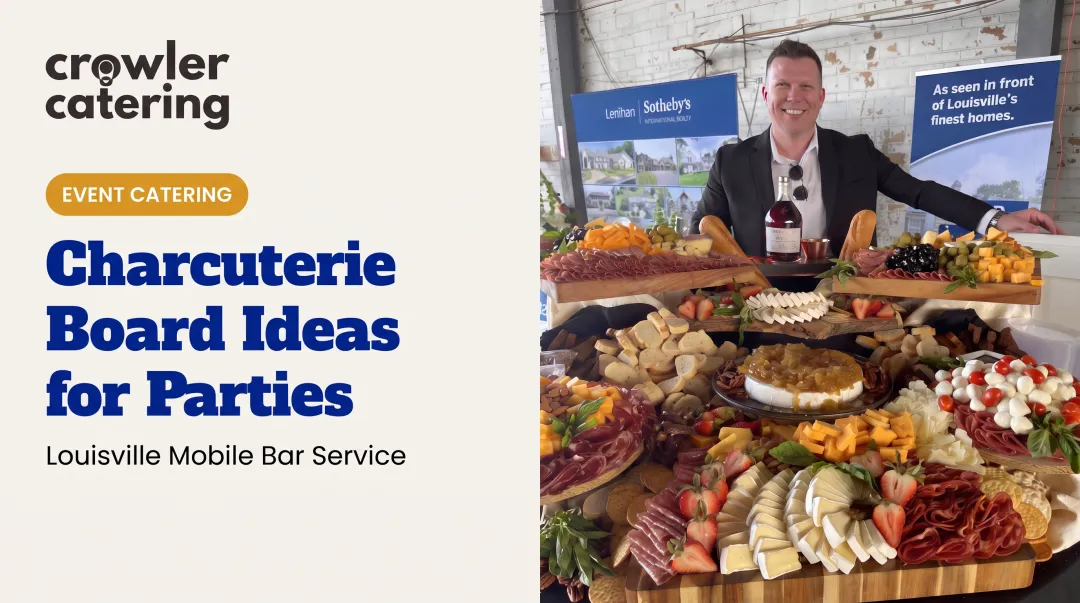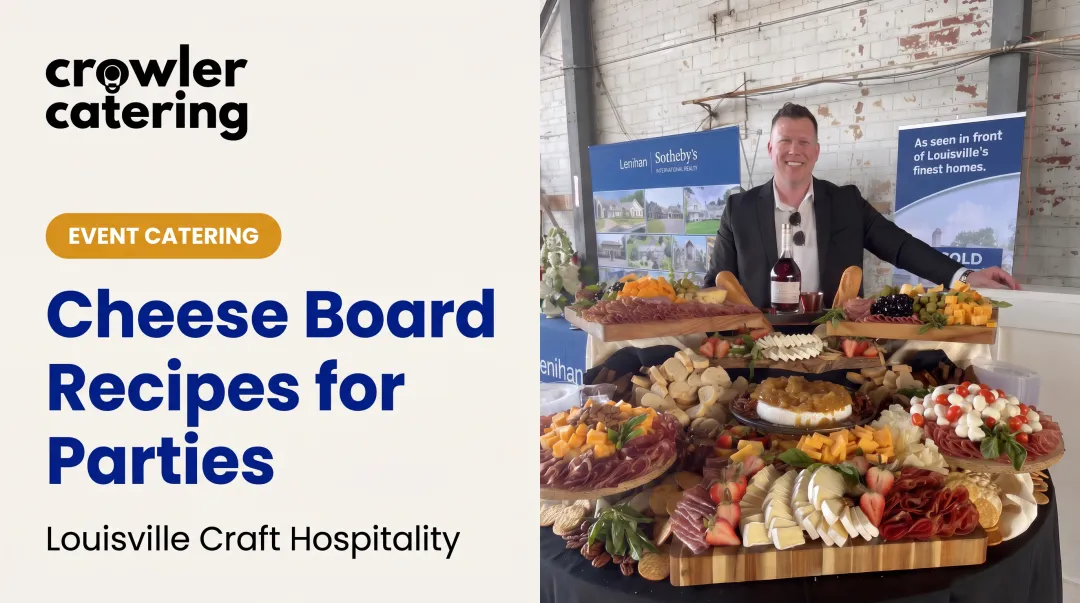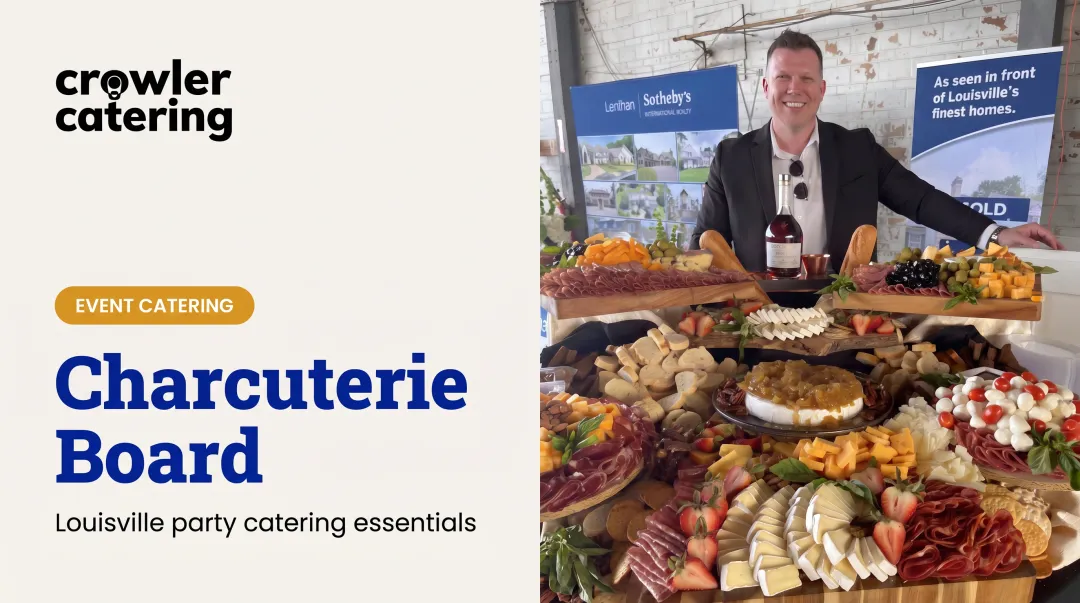

Charcuterie boards fit weddings in ways few other foods can. Serve them during cocktail hour while guests mingle, arrange them as eye-catching reception centerpieces, or provide them in the bridal suite for pre-ceremony snacks. They're particularly valuable for Louisville's diverse wedding venues, from downtown ballrooms to backyard summer celebrations.
Key Takeaways
- Charcuterie boards accommodate dietary variety while doubling as edible décor
- Kentucky producers like Kenny's Farmhouse Cheese offer local sourcing options
- Professional catering eliminates food-safety risks and saves wedding-week time
- Proper cold holding and timing are essential for outdoor Louisville summer weddings
- Cocktail hour remains the most practical and popular service moment
Why Charcuterie Boards Are Perfect for Weddings
Variety That Accommodates Your Guest List
Wedding guest lists bring together people with different tastes and dietary needs. According to culinary professionals at the Institute of Culinary Education, traditional charcuterie boards can be adapted for vegetarians or vegans by replacing meats with plant-based options while maintaining balance.
The FDA identifies nine major allergens, including milk, wheat, tree nuts, peanuts, and sesame. For guests with restrictions, The Knot recommends using separate containers for special-diet foods to prevent cross-contact.
Smart accommodation strategies:
- Label each component clearly, especially common allergens
- Place vegetarian and vegan selections on dedicated platters
- Offer gluten-free crackers in a separate dish
- Provide dairy-free spreads alongside traditional cheese
Food That Functions as Décor
A well-styled charcuterie display serves double duty. The Knot describes grazing tables as decorative tablescapes.
Match your board to your wedding palette by selecting fruits and edible flowers in complementary colors. Spring strawberries add soft pink tones, summer peaches bring warm amber, and fall grapes introduce deep burgundy. Garnish with fresh herbs or seasonal blooms that echo your centerpieces.
The serving vessel itself contributes to the aesthetic. Wood boards deliver rustic warmth, slate provides modern elegance, and marble adds formal sophistication.
Flexibility Across Your Wedding Timeline
Cocktail hour is where charcuterie fits most naturally. Guests arrive hungry, and charcuterie boards provide immediate, approachable food that doesn't require plating or utensils.
Other serving moments:
- Pre-ceremony snacks in the bridal suite
- Table centerpieces that guests graze throughout dinner
- Late-night reception tables when energy dips
Place boards where guests can approach from multiple directions, encouraging circulation and conversation. The visual abundance draws people in, so the station doubles as a place to gather and talk.
Customization for Kentucky Weddings
Louisville couples can incorporate regional ingredients that tell a local story. Kenny's Farmhouse Cheese appears at the Bardstown Road Farmers' Market, offering Kentucky Bleu and Bleu Gouda. Broadbent B & B Foods produces country ham and hickory-smoked bacon, while Boone Creek Creamery makes Kentucky Proud cheeses.
Pair Kentucky honey with aged cheddar, or arrange local preserves alongside artisan crackers. Seasonal timing matters. Confirm availability with producers before finalizing your menu, especially for wedding dates during busy harvest periods. Louisville caterers such as Crowler Catering can build grazing boards around these regional products when you want a local spread without sourcing every item yourself.

What to Include on a Wedding Charcuterie Board
A wedding charcuterie board works best when salty, sweet, creamy, and crunchy elements show up in every few bites. Build around the categories below so the spread looks abundant and keeps guests moving.
Selecting Cheeses for Your Board
Choose 3-5 varieties with different textures:
- Soft: Brie, goat cheese, or burrata for creamy richness
- Semi-hard: Aged cheddar, Gouda, or Gruyère for balanced flavor
- Hard: Parmigiano-Reggiano, aged Manchego, or Asiago for sharp intensity
Kenny's Farmhouse Cheese Bleu Gouda pairs naturally with honey, berries, and Marcona almonds. Those pairings make it a strong pick for a wedding board. Balance mild options that appeal to conservative palates with bold selections for adventurous guests.
Avoid extremely pungent cheeses that may overwhelm in close quarters. Save intensely aromatic varieties for smaller, intimate gatherings.
Choosing Cured Meats
Include 2-4 cured meat varieties:
- Prosciutto (delicate, slightly sweet)
- Salami (bold, garlicky)
- Coppa (rich, marbled)
- Broadbent country ham (smoky, distinctly Kentucky)
Presentation techniques add visual interest:
- Fold salami into quarters and arrange in overlapping rows
- Roll prosciutto into loose rosettes
- Fan thin slices in curved lines
- Drape longer cuts over the board's edge for dimension
Fresh and Dried Fruits
Fruit adds color and freshness while cleansing the palate between rich cheeses and meats. Choose seasonal Kentucky options when possible.
Seasonal fruit guide:
- Spring: Strawberries, early berries
- Summer: Peaches, cherries, blackberries
- Fall: Apples, grapes, pears, figs
Dried fruits like apricots, dates, and cranberries add concentrated sweetness and don't require refrigeration. They help most at outdoor weddings, where fresh fruit can deteriorate quickly.
Nuts, Crackers, and Bread
Crackers and bread provide textural contrast:
- Water crackers (neutral base)
- Seeded flatbreads (nutty crunch)
- Sliced baguette (classic pairing)
- Gluten-free options in separate containers
Candied pecans, spiced walnuts, or honey-roasted almonds add sweetness and crunch. Nuts also fill visual gaps and contribute healthy fats that balance rich cheeses.
Spreads, Jams, and Condiments
Condiments elevate simple pairings into memorable combinations.
Essential spreads:
- Local Kentucky honey (pairs with blue cheese and aged cheddar)
- Fig jam (complements prosciutto and brie)
- Whole-grain mustard (cuts through fatty meats)
- Fruit preserves (balance sharp cheeses)
Offer small portions in dedicated dishes with individual spoons to prevent cross-contamination. The Institute of Culinary Education emphasizes balancing fatty, sweet, salty, and acidic elements. Honey offsets salt and fat especially well.

Cost Considerations for Wedding Charcuterie Boards
Per-guest pricing for wedding charcuterie varies widely, and no single US or Louisville average is published. Guidance cited by The Knot puts professionally made boards at roughly three to four times the cost of DIY.
What you pay usually comes down to a few levers:
Factors that affect cost:
- Guest count and how generous each portion is
- Ingredient tier (artisan and specialty vs. grocery-store picks)
- Presentation level (rustic wood boards vs. premium marble)
- Rentals (vessels, utensils, cooling trays)
- Delivery, setup, and breakdown labor
Money-saving strategies:
- Lean on seasonal Kentucky ingredients with shorter supply chains
- Cap cheeses at three varieties instead of five
- Serve one large grazing table instead of many small boards
- Buy larger cheese and meat formats to lower the per-ounce price
Louisville couples should ask for itemized quotes that break out food, presentation, delivery, setup, rentals, taxes, and service charges. Compare a few caterers and confirm exactly what’s included before you sign.
DIY vs. Professional Catering: What's Right for You?
When DIY Makes Sense
DIY works for small, intimate weddings (under 20 guests), bridal-party snacks, or pre-wedding events where you control the timeline. It requires sufficient refrigeration, a food-safe setup team, and cleanup coverage.
Time commitment reality:
- Shopping: 2-3 hours
- Ingredient prep (slicing, arranging): 2-4 hours
- Setup and styling: 1-2 hours
- Monitoring and replenishment: Ongoing
- Cleanup: 1 hour
You'll also need skill in portion calculation, presentation techniques, and food-safety protocols. The savings come with a labor trade-off during an already busy wedding week.
When to Hire a Professional Caterer
Professional catering is worth it when you need food-safety coverage, polished presentation, and your time back. Experienced caterers understand wedding timing and coordinate with your venue's schedule.
What you typically get:
- On-site food-safety monitoring
- Setup, replenishment, and breakdown
- Coordination with your venue and vendors
- Presentation that holds up through the reception
The Knot notes that caterers may offer stronger ingredient sourcing and reduce excess purchasing, which matters when you buy expensive artisan cheeses that spoil quickly.
Locally, Crowler Catering builds custom wedding charcuterie boards and grazing stations with artisan cheeses, cured meats, fruits, and seasonal accompaniments. The team handles logistics so couples can enjoy the day instead of monitoring food temperatures.

Finding a Wedding Caterer in Louisville
Questions to ask potential caterers:
- What is your minimum guest count or order minimum?
- Can you accommodate dietary restrictions with labeled, separate platters?
- Are serving boards, utensils, and display pieces included, or rented separately?
- How do you handle setup, breakdown, and food-safety monitoring?
- What are your delivery radius and fee structure?
- Can you source Kentucky ingredients and match our wedding aesthetic?
Look for caterers with wedding-specific experience who understand presentation standards and can coordinate with other vendors. Request references from recent weddings at similar venues.
How to Style and Present Your Wedding Charcuterie Board
A strong wedding board looks abundant from every angle and holds up in photos. Build it in layers—structure first, then color, then personal touches.
Arrangement principles
Guidance adapted from The Knot experts:
- Place cheeses first as visual anchors, varying their shapes
- Add folded, rolled, or fanned meats in flowing lines
- Fill gaps with clusters of fruit, nuts, and crackers
- Create height with small bowls for spreads and dips
- Tuck fresh herbs or edible flowers into the last open spaces
Balance the board as you go. Don't park all the cheese on one side. Spread colors and textures so every section looks full.
Color coordination
Match the board to your wedding palette:
- Blush: Strawberries, raspberries, prosciutto, brie
- Jewel tones: Purple grapes, dried apricots, aged cheddar, salami
- Rustic fall: Apples, pears, walnuts, aged Gouda, fig jam
Personalization options
Small details make the spread feel like your wedding:
- Monogrammed cheese picks or cocktail flags
- Custom labels for each cheese and meat
- Themed shapes (heart-shaped brie for romantic receptions)
Serving vessels
The board itself sets the tone for the room:
- Wood — rustic barns and outdoor venues
- Slate — industrial lofts and modern spaces
- Marble — ballrooms and formal receptions
Timing and Placement: When to Serve Charcuterie at Your Wedding

Ideal Timing
Cocktail hour remains the most practical time to serve. Guests have arrived, dinner isn't ready, and the informal format encourages mingling.
Other popular windows include pre-ceremony bridal-suite snacks and late-night reception tables. Each needs different portion calculations: cocktail-hour boards feed the full guest list, while a bridal-party spread stays small.
Placement Strategies
- Central grazing table: One large display that becomes a focal point
- Individual boards per table: Centerpieces that guests graze throughout dinner
- Multiple stations: Distributed displays that prevent bottlenecks
Choose locations where guests can approach from more than one direction. Avoid narrow hallways or corners that create crowding.
Temperature and Food Safety: Critical for Louisville Summers
The FDA and USDA establish strict limits: perishable food must not remain between 40°F and 140°F for more than 2 hours, or 1 hour when outdoor temperature exceeds 90°F.
Outdoor Kentucky summer weddings require:
- Active cold holding (ice pans, chilled serving trays)
- Shaded placement away from direct sun
- Smaller initial displays with refrigerated backup batches
- Timed replenishment every 45-60 minutes
- Documented discard times to prevent spoilage
Indoor air-conditioned venues make temperature control easier but don't eliminate the 2-hour rule. Professional caterers can handle cooling equipment and temperature monitoring for you.
Never compromise on food safety to maintain visual abundance. A beautifully styled board that makes guests sick isn't worth the risk.
Frequently Asked Questions
How much does a charcuterie board cost for a wedding?
Professional wedding boards typically cost three to four times a DIY setup. Request itemized local quotes that break out food, presentation, delivery, setup, rentals, and fees. Price depends on guest count, ingredient quality, and service level.
What should I put on a charcuterie board for a wedding?
Include 3-5 cheeses (soft, semi-hard, hard), 2-4 cured meats, seasonal fruits (fresh and dried), crackers and artisan bread, nuts, and complementary spreads like honey, fig jam, and mustard. Balance mild and bold flavors to accommodate all guests.
What should I avoid putting on a charcuterie board?
Skip quickly-browning fruits unless treated, overly pungent cheeses that may offend in close quarters, and allergen-heavy items without clear labels. Avoid foods that don't hold up at room temperature. The Knot experts also recommend keeping crackers off the board to prevent sogginess.
What is the 3-3-3 rule for a charcuterie board?
The Knot defines it as three kinds of each food type: 3 cheeses, 3 meats, and 3 accompaniments (crackers, bread, or fruit). The mix creates varied textures and flavors in a balanced presentation.
How far in advance can I prepare a wedding charcuterie board?
Cheese and meat slicing can happen 1-2 hours before service. Full assembly should occur 30-60 minutes before guests arrive. Keep all components refrigerated at 40°F or below until the display goes out, and apply the FDA 2-hour rule once at room temperature.
How much charcuterie do I need per wedding guest?
Ask your caterer to portion based on whether charcuterie is the only appetizer or one of several, and whether a full dinner follows. Those factors drive how much you need per guest and help avoid both shortages and waste.
Ready to plan your Louisville wedding charcuterie experience? Contact Crowler Catering at 502-541-8348 or info@crowlercatering.com to discuss customized boards, grazing stations, and professional service that handles every detail—from Kentucky ingredient sourcing to food-safe setup and cleanup.