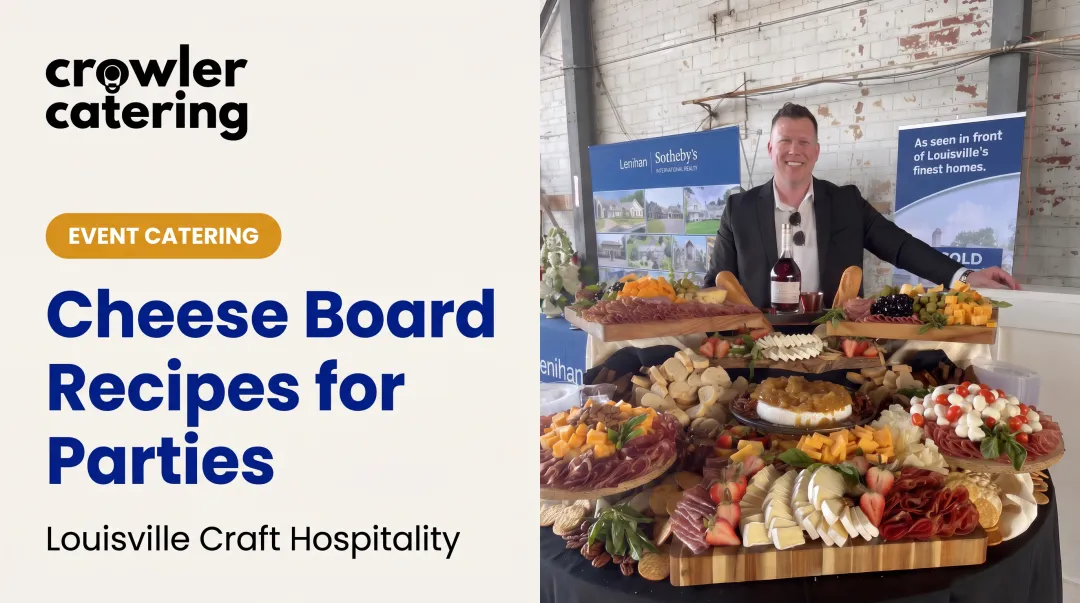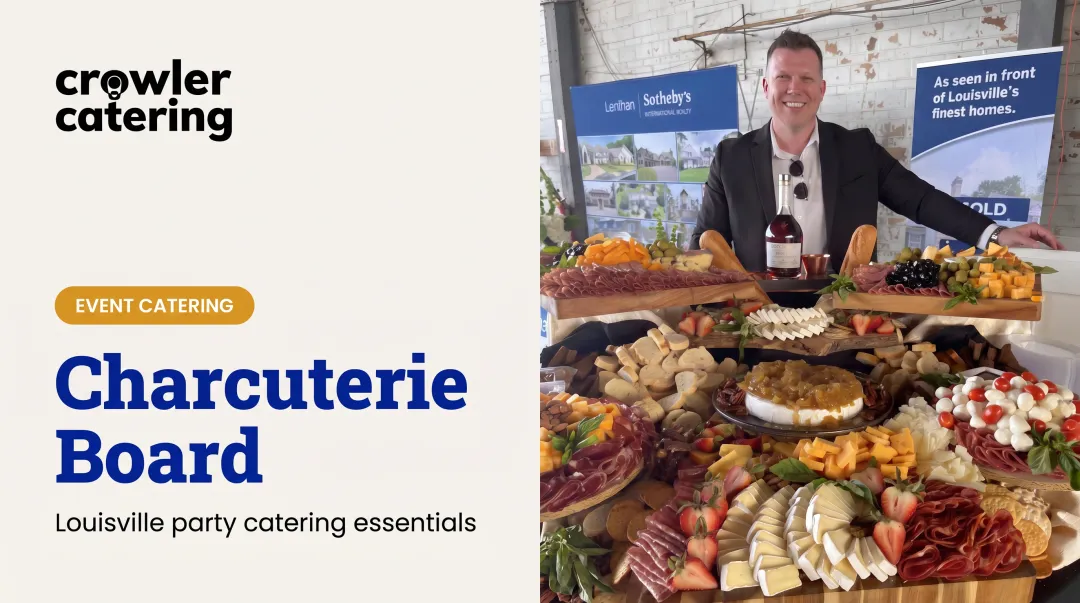

This guide walks you through essential components, ingredient selection, arrangement strategies, themed ideas, and expert tips for creating memorable charcuterie boards. Louisville hosts will also discover where to source quality ingredients locally—from Whole Foods and Trader Joe's to specialty shops—plus when professional catering services can eliminate the DIY stress entirely.
Key Takeaways
- Use the 3-3-3-3 framework: 3 cheeses, 3 meats, 3 starches, and 3 accompaniments
- Plan 1–2 oz of cheese per guest (Whole Foods), more if the board is the main course
- Prep and arrange ahead so you can mingle instead of managing food all night
- Keep perishables within the USDA 2-hour room-temperature limit for guest safety
Essential Charcuterie Board Components
Every successful party board balances five core categories that work together to create variety in flavor, texture, and visual appeal.
The Five Foundational Categories
- Cured meats — savory richness and protein
- Cheeses — creamy, sharp, or funky notes that anchor the board
- Crackers and bread — neutral vehicles for building bites
- Fresh and dried produce — sweetness, acidity, and color
- Accompaniments — nuts, pickles, honey, jam, and olives for crunch, tang, and finish
Portioning for Your Guest Count
According to Whole Foods' cheese-board guide, plan for 1-2 oz of cheese per person when your board serves as an appetizer. If your spread is the main event, increase portions accordingly. Select 3-4 cheese varieties spanning different milk types, textures, and intensity levels.
For meats, skip rigid ounce formulas. Aim for roughly equal visual weight with the cheeses, then adjust for your crowd's preferences.
The 3-3-3-3 Shopping Framework
This beginner-friendly checklist prevents both under- and over-buying:
- 3 cheeses (hard, soft, and optionally blue)
- 3 charcuterie meats (varying textures and spice levels)
- 3 starches (crackers, sliced baguette, breadsticks)
- 3 accompaniments (fresh fruit, nuts, pickled items, or spreads)
This framework controls variety without overwhelming your shopping cart or your board.

Extras That Elevate
- Nuts for crunch — candied pecans, Marcona almonds, or pistachios
- Pickled items (cornichons, olives, marinated artichokes) for acidic contrast between rich bites
- Honey or jam for sweetness alongside aged cheeses
- Fresh herbs such as rosemary sprigs for garnish and aroma
Budget Considerations
Mix premium and accessible items to control costs without sacrificing impact. Splurge on one standout cheese or artisan salami, then fill in with grocery-store favorites. Trader Joe's offers excellent charcuterie selections at competitive prices, while Whole Foods provides specialty items and in-store cheese specialists who can guide selections.
Sourcing Quality Ingredients in Louisville
Louisville hosts have excellent local options:
- Whole Foods Market (4944 Shelbyville Rd) — cheese specialists and curated boards
- Trader Joe's (4600 Shelbyville Rd) — affordable charcuterie and unique finds
- Kroger (multiple locations including Germantown Square) — Murray's cheese selection
- Costco (3408 Bardstown Rd) — bulk quantities for larger gatherings
- Lotsa Pasta (3717 Lexington Rd) — local specialty shop with imported cheeses, meats, olives, and breads
Verify specific product availability before your event, as inventory varies by location.
Verify specific product availability before your event, as inventory varies by location. Short on time? Crowler Catering builds custom charcuterie and grazing boards for Louisville parties if you'd rather skip the shopping run.
Selecting Premium Meats and Cheeses
Build the board around variety: a few distinct meats, cheeses from more than one texture family, and pairings that balance bold with mild.
Charcuterie Meat Essentials
- Prosciutto — Delicate, buttery, paper-thin slices. Choose Italian prosciutto crudo (cured, uncooked) over cotto (cooked) for classic boards.
- Salami — Ranges from mild to robust; Genoa is a crowd-pleasing starting point.
- Soppressata — Southern Italian pork salami with bold, slightly spicy character and an oblong shape.
- Spanish chorizo — Dried, cured, and ready to slice. Skip Mexican chorizo; it is fresh and must be cooked.
- Mortadella — Smooth, nearly creamy texture studded with fatback cubes and sometimes pistachios.
- Capicola (coppa) — From the pig’s neck and shoulder; tender, marbled slices with balanced seasoning.
Cheese Selection Strategy
Include at least one cheese from each texture category:
- Hard cheeses — Aged cheddar turns drier and crumblier with sharp, complex flavor. Manchego (Spanish sheep’s milk) brings buttery, nutty, sweet-salty notes. Gouda moves from semi-hard to hard with age and intensifies over time.
- Soft cheeses — Brie and Camembert ripen toward runnier centers; fresh goat cheese stays light and fluffy with mild tang.
- Blue cheese — Penicillium veins add pungent, savory depth for guests who want a bolder bite.
Pairing Principles
Balance intensity across your selections:
- Pair mild cheeses with bold meats (fresh goat cheese with spicy salami)
- Match creamy textures with crunchy elements (Brie with toasted nuts)
- Try Wisconsin Cheese's recommended pairings: salami + Gouda, prosciutto + Parmesan, soppressata + Havarti
Avoid selecting near-duplicates. Choose cheeses and meats with distinct flavor profiles rather than three variations of the same style.

Temperature Matters
Academy of Cheese explains that cold fat molecules contract, muting aromas. Around 68-72°F, fats relax and release full flavor. Remove cheese from refrigeration one hour before serving—but remember this counts toward USDA's 2-hour room-temperature safety limit.
Common Selection Pitfalls
Skip overly pungent cheeses that take over a small board. Avoid pre-sliced meats that dry out quickly—buy whole pieces and slice fresh when you can.
Step-by-Step Assembly and Presentation
Thoughtful arrangement transforms ingredients into an inviting display that guides guests naturally around the board.
Set the Foundation
Select a surface based on party size and aesthetic:
- Wooden boards suit most gatherings and photograph well
- Slate platters add modern elegance
- Marble slabs keep items cool longer
- Parchment-lined tables work for large crowds when a single board won't suffice
Whole Foods recommends placing anchor items before anything else:
- Position cheeses at different points around the board, not in a line
- Set small bowls for honey, jam, mustard, and olives to create focal points
- Leave space between anchors for meats and fillers
This framework prevents crowding and establishes visual balance.
Build Out the Board
Create visual interest with varied meat folding techniques:
- Fold salami into quarters for easy grabbing
- Create prosciutto ribbons by loosely folding thin slices
- Arrange in clusters near complementary cheeses rather than spreading evenly
Next, place crackers, sliced baguette, and vegetable sticks where guests can reach them without crossing the board:
- Stand some crackers on edge and lay others flat for height variation
- Nest fruit clusters (grapes still on the stem work especially well) in gaps between cheeses
- Keep clear pathways so people can grab items from more than one angle
Bon Appétit's food director suggests using nuts, berries, and fresh herbs as final touches:
- Scatter nuts in empty spaces
- Tuck fresh rosemary sprigs around the edges
- Add berries for pops of color
- Use edible flowers sparingly for special occasions
Aim for full coverage without overcrowding. Guests should pick up any item without shifting what sits beside it.

Polish the Presentation
A few finishing choices make the board easier to read and easier to use:
- Odd numbers of items read better visually (5 salami roses, 3 cheese wedges)
- Height variation from stacked crackers or small risers under bowls
- Separated strong colors so reds and greens are not all clustered together
- Full accessibility so nobody has to reach across the board for a favorite bite
Label unfamiliar cheeses and meats with small cards so guests can explore confidently.
Creative Themed Board Ideas for Every Occasion
Match the board to the season or the event and a basic spread feels planned, not thrown together.
Seasonal Boards
Summer boards celebrate fresh produce:
- Grilled peaches or pineapple add smoky sweetness
- Fresh berries (blackberries, strawberries) provide color
- Lighter cheeses like fresh mozzarella or chèvre keep things refreshing
- Kiwi and grapes round out the fruit selection
Fall boards embrace harvest flavors:
- Whole Foods' fall guide suggests tart apples, pears, and pomegranate
- Aged cheddars and nutty cheeses match the season
- Candied pecans and pumpkin seeds add crunch
- Rye crackers and crostini provide rustic texture
Winter holiday boards feel festive:
- Food Network's Christmas board arranges rosemary around the edge for a wreath effect
- Brie, salami, prosciutto, and sharp white cheddar anchor the spread
- Pomegranate seeds, dried fruits, and artichoke hearts add holiday flair
- Spiced nuts or a few squares of dark chocolate round out the board
Occasion-Specific Themes
- Date night: Smaller portions, higher-end picks—truffle cheese or Spanish jamón ibérico
- Kid-friendly: Mild cheddar, pepperoni, crackers, grapes, strawberries, and pretzels (skip strong cheeses and bold meats)
- Brunch: Bagels, smoked salmon, cream cheese, capers, sliced cucumbers, and tomatoes
- Dessert: Dark and milk chocolates, biscotti, fresh berries, dried apricots, honeycomb, and chocolate-hazelnut spread
Dietary Adaptations
Vegetarian boards retain dairy cheeses but omit cured meats:
- Add marinated vegetables (roasted red peppers, artichokes)
- Include stuffed grape leaves or dolmas
- Feature multiple dips (hummus, baba ganoush, tapenade)
- Emphasize nuts, olives, and pickled items for savory depth
Vegan boards swap in plant-based anchors:
- Whole Foods' vegan guide starts with vegan cheeses as the anchor
- Add vegan sausage or deli alternatives
- Focus on produce, crackers, nuts, jam, and fresh herbs
- Use edible flowers for visual impact
Gluten-free boards hinge on label checks:
- Choose crackers labeled gluten-free per FDA regulations
- Check all packaged items (meats, dips, condiments) individually
- Use separate boards and utensils to reduce cross-contact
- Emphasize naturally gluten-free options like vegetables, fruits, and cheeses

Expert Tips and Common Mistakes to Avoid
Smart preparation and food-safety awareness ensure your board stays beautiful and safe throughout your event.
Make-Ahead Strategy
Prep components 24-48 hours in advance:
- Cheese: unwrap, portion, and store in airtight containers
- Meats: slice or fold, layer with parchment, refrigerate
- Produce: wash and dry fruit, cut vegetables, store separately
Build the complete board 2-3 hours before guests arrive, then cover and refrigerate. Keep it chilled until 30-60 minutes before serving so cheese can warm slightly while staying in a safe temperature window.
Critical Food Safety Rules
USDA guidelines establish clear limits:
- Keep perishable foods at 40°F or below
- Discard items left at room temperature for more than 2 hours (or 1 hour above 90°F)
- The danger zone is 40-140°F, where bacteria multiply rapidly
For longer parties, use small boards that can be replaced or refilled from the refrigerator rather than displaying all food at once.
Top 5 Things to Avoid
1. Fruit that oxidizes quickly. Fresh-cut apples and pears turn brown when enzymes meet air. If you include them, coat with lemon juice or add them just before serving.
2. Overly pungent cheeses in small spaces. Strong blues or washed-rind cheeses can overpower everything else. Save them for outdoor gatherings or well-ventilated rooms.
3. Items that spoil or melt. Hot dips slide into the danger zone as they cool, and chocolate softens in warm rooms. Stick to room-temp spreads and skip melt-prone sweets on long displays.
4. Difficult-to-eat components. Skip items that need knives, forks, or a pile of napkins. Everything should be grab-and-go.
5. Low-quality ingredients. Cheap cheese and generic crackers fall flat. Fewer strong items beat a crowded board of mediocre ones.
Professional Presentation Tricks
- Use odd numbers for visual balance (3 cheese wedges, 5 salami roses)
- Create height variations with stacked elements or small risers
- Separate bold colors rather than clustering them
- Leave clear access so guests never reach across the board
When to Call in the Professionals
For larger gatherings, corporate events, or nights when you want the board done right without the prep, pros can cover sourcing through final styling.
Crowler Catering builds customizable charcuterie boards and grazing stations for Louisville events, with artisan cheeses, cured meats, seasonal accompaniments, and chef-led arrangements. Formats fit cocktail hours, weddings, holiday parties, and corporate gatherings.
Call 502-541-8348 to plan your board and spend the event with your guests, not the cutting board.
Frequently Asked Questions
What to put on a charcuterie board for 20 people?
Scale the 3-3-3-3 framework up: plan 1-2 oz of cheese per person (20-40 oz total), with proportional amounts of 3 meats, 3 crackers/breads, and 3 accompaniments. Use multiple boards or a large grazing table to ensure easy access for all guests.
What is the 3-3-3 rule for charcuterie boards?
The 3-3-3 rule (often extended to 3-3-3-3) means 3 meats, 3 cheeses, 3 crackers or breads, and 3 accompaniments such as fruit, nuts, and pickled items. It keeps variety balanced without bloating your shopping list.
What are 5 things to avoid on a charcuterie board?
Skip fresh-cut apples and pears that oxidize, overly pungent cheeses in small spaces, hot dips that enter the food-safety danger zone as they cool, difficult-to-eat items requiring utensils, and low-quality ingredients that disappoint guests.
What are some creative theme ideas for a charcuterie board party?
Try rainbow color-coordinated boards, international themes (Italian, Spanish, Mediterranean), holiday-specific designs, breakfast/brunch boards with bagels and smoked salmon, or dessert boards featuring chocolates and sweet treats instead of savory items.
How far in advance can you make a charcuterie board?
Assemble the complete board 2-3 hours before guests arrive for optimal freshness. Individual components can be prepped 1-2 days ahead and stored properly, with final arrangement done shortly before serving to maximize visual appeal and food safety.
How much does a charcuterie board cost for a party?
Costs vary widely based on ingredient quality, guest count, and sourcing. Control expenses by using the 3-3-3-3 framework to limit categories, mixing one premium item with grocery-store staples, and shopping Louisville options like Trader Joe's for value or Whole Foods for specialty selections.
Charcuterie boards simplify entertaining by swapping complicated cooking for thoughtful curation. With the 3-3-3-3 framework, smart portioning, and basic food safety, you can build a spread that looks impressive and still lets you enjoy the party.
Balance variety, build visual interest, and serve food at its freshest—whether the board is for a few friends or a full corporate crowd. Louisville hosts also have strong local sourcing options.
When you want the board handled end to end, Crowler Catering builds customizable charcuterie and grazing boards, from ingredient selection through final styling.